November 25, 2012

Leaving


I left village.
Even typing those words doesn’t quite make it real.

A tiny part of me still thinks I’ll be going back; that this is just another break in Ouaga. I am wondering when it’s going to sink in that David will never run to me with his little chubby two-year old arms, I will never shake hands with all those old women at the market anymore, I may never see the stars from Alima’s house as we chat about life, and that I … left village.

It was difficult. It was frustrating. It was joyful. It was exciting. It was sad.

It had drama and expectations. It had laughter and love. It had people who had gotten to know and accept me. It had people who never really liked me but pretended to. It had sunsets and sunrises. It had adorable children who didn’t understand yet. It had old women who understood too well. It had unexpected gifts and expected giving. It had a few quickly hidden tears by close friends. It had a few not quickly enough hidden tears by me. It had a night of my best friend in village reminding me of all the real reasons I had to go home because she knew. It had long days of me convincing everyone I wasn’t leaving because I didn’t care, but in spite of the fact that I still cared deeply. It had Burkinabe left hand shakes, French kisses on the cheek and people surprised by American hugs. It had good bye.

It was just… full. 

November 23, 2012

You go to america why?


These last few weeks have been full of explaining over and over again why I can’t stay in my village. People are sweet and have been insisting I stay at least one more year. They like me, they say. They finally know me. I finally know Moore. Why do I have to go? Stay! Stay! Stay! Stay! they say. 

I thought you all might enjoy the reasons my villagers would accept as “good enough” for me to leave them and their usual responses. So here are my direct translations (from Moore, least to most convincing) of the reasons I gave for leaving:

1) My work is finished. Our work is only two years here.  You know Mariam, the first foreigner? She only stayed two years, too. When I came they told me, you can come, but you can only stay two years. (Response: oh.)

2) I have to go find a job. I can get a good job in America to make money. (Response: And then you can come back here and share! May God give you lots and lots of money!) 

3) I will look for a husband. 
(Automatic responses: We have men here!; You can marry our husband!; Here is my brother. He says you’re pretty. Stay now.)
All of the men here want lots of women! For my people it is one man and only one woman. If you can find a man who only wants one wife truest true-- he can't change his mind like, sure I want one wife, but two years later he sees another woman he wants-- and he speaks english, you tell me and we'll chat. 
(New response: May God give you a nice/helpful husband!; We will come to your wedding.; Bring your children to see us!)

4) My grandparent, my mother's mother, wants to see me. She said two years is long enough and I should come home now. I also want to see my family and the people in my father's village. 
(Response: Your mothers mother is lasting!? Oh, yes, you must go see her. But then come back. She could come live here with you?) 
No, she can’t come here. 
(Oh. Well, it is good [for you] to go see her. Greet her for us.)
(Response 2: May God bless your parents for giving birth to you. Are the old man and woman well? Good. We are glad they came to see us all the way here. Tell them thank you for sending you. )


Hopefully that translated OK and made you smile a bit. I know it does me. I love these people!

November 17, 2012

Tough Skin


"My hands don't bleed anymore."

When they asked what in my service I was most proud of, that's the answer that come out. Which, of course, took some explaining.
...

I went to my friend Alima's mother-in-law's house the other day. Alima and her husband had been there harvesting, and I hadn't seen them for a while. So, in true Burkina fashion, I invited myself over. 

The morning I left for the visit, my bike had a flat. I went to the bike-repair-man to get it fixed, but of course he was in his fields harvesting like everyone else. So I walked.
I didn't get there til late morning. They made a big deal that I'd walked "all that way" and seemed pleased that I'd come to see them. 

I'd helped this family harvest once before, last season, and several of Alima's relatives I knew from the rice place or the health clinic. So I felt pretty at home and decided to stay a bit. I wasn’t about to just sit there while they worked, so I asked to help. They offered me some cooked beans to eat. I offered to help again, and they told me to rest under a tree. I asked a third time, and they finally went to go find a knife I could use.

Harvesting millet involves several steps. After cutting down the millet stalks, you cut of the top of the millet and put it in large bowls. These bowls are carried on the head to a large wooden pallet where they are all put on one gigantic pile. They are kept there until the millet seeds can be removed and placed in storage or ground into flour and then stored. I helped cutting off the tops of millet plants. A lot of millet plants. Because the harvest has to last a family the whole year, there is a huge amount to be done.

After a little bit of time working, it suddenly made sense to me why, even though it wasn’t hot season, everyone started harvest around 5 am. At noon in the sun in Burkina, it’s always hot.

There were four of us working in the same area. The work was routine and most of the time was spent chatting and bending over to work. Most women here live their lives like this: forever bending over to do something or another and gossiping with the woman next to them. I felt pleased to be included, glad that I could pick up on some of what they were saying. Occasionally since they knew I was leaving soon, someone would ask me something about America (is it true that some families have two cars?), but mostly I just listened.

Too often for my liking, Alima would ask me if I was ready to rest yet. After a while of this, I chided her for treating me like an old woman. She was so worried I’d get hurt. Her friends laughed and she stopped pestering me. But as we went back to work, she also explained to me that she was worried working in the sun like this would give me malaria again (a common folk belief). Then I tried to explain to her that you can only get malaria by mosquito bites. I’m not sure I convinced her, but who knows.

When I finally sat down to rest, the women were impressed, despite the fact that they had and would work for 5 times as long every day for several months. I had brought my camera, and I brought it out to take some pictures of the women harvesting. They loved it, and on request they posed like pros (with the baby, all together now, cutting millet). I ate the beans I was offered once again. Then I said my good-byes and told the women I would be back soon.


Two days later I made the track back, this time in late afternoon. It wasn’t nearly as hot. Alima fussed over me a bit, concerned the harvesting had been too hard on my hands. She seemed satisfied only when I let her examine them. I had cut one finger but it had been protected by the skin and hadn’t bled at all. I didn’t have any blisters. She seemed satisfied. “Well” she said in Moore, “I just wanted to be sure. Last year you had bad problems with your hands. Your hands bled and we had to wrap one in fabric. Remember?”

I had completely forgotten, but as she spoke, I did remember. After much less work the last year, I’d had bad blisters and bled through a piece of cloth I’d tied on my hand to keep working. As I remembered and it dawned on me how much had changed in a year. I took a moment too long in responding; to cover it, I made a joke. I said that clearly my hands had become strong and Mossi; I was sure they’d turn as dark as hers any day now. She laughed and went back to what she’d been doing.

…

I couldn’t get that conversation out of my head though. I started to realize that my hands were a bit more calloused, that they didn’t bleed anymore when I scrubbed my clothes clean, and that I couldn’t remember the last time I’d had a blister. I remembered them playing with children, hauling water, holding the hands of sick people, greeting everyone a billion times a day by shaking their hand, sweeping my courtyard ... doing small things that all added up to tougher skin.

…


“My hands don’t bleed anymore”

You see, I explained, I came to this country with hands that knew a pen and a key board pretty well, but they didn’t know the first thing about a how to use a hoe or hold a newborn. My hands will always be those of a privileged person. They come from and will go back to a land of opportunities. But they have changed. So much so, that they don’t really bleed anymore.
…

I’ve said before, a Burkinabe’s hands tell the stories of their heart. I like to think that now mine do a little bit, too.

October 25, 2012

Both

Hey Everybody.
I’m in Ouaga for the moment for reasons beyond my control (thank you red tape), so I thought I would write you a note.
I realized the other day I have less than 5 weeks in village left. After all this time I’ve finally realized the end is coming… maybe too fast. Many of the rest of my weekends will be in Ouaga saying good-bye to friends, completing paperwork, and celebrating holidays (my birthday, Thanksgiving). That’s less than a month, really, in village. Enough time to wrap up one project and hang out with my people a few more times. Enough time to say good-bye is all.
They’re a bit of an emotional rollercoaster these begin-endings.
One day I am secretly wishing for chocolate and family/friends and that beloved airline ticket in my inbox. Maybe, I think, I’ll ask to leave early, other people are doing it.…  The next day I look at a picture or a landscape or a friend and I get all mushy. I remember I never get this experience again. Even if I come back to Burkina sometime, I never get it all back. Then I think: I can extend and spend some more time, maybe I should do a third year. But always I come back to the plan I made. I know that as I am leaving the family I’ve made here I get back to go back to the one I’ve always had in America. And I know they’re both a part of me.
OK, maybe you don’t care and just want me to come back ASAP. I get that. I’ve missed you all for these two years, too. And as my cousin put it ‘well, we have no attachment to those people, we just want you to come home.’ I’ll see you soon.
Until next time,  JK


September 13, 2012

‘Tis the Season


Tis the season in Burkina Faso… for malaria.

And I got it.
Please don’t freak out, I said got. Past tense. All better now.

Um, aren’t you supposed to be on some kind of medicine to prevent that?
Errr…. yes. I am. I have to be. For me it’s a prophylaxis called doxycycline; a pill I take once a day. This miracle pill doesn’t stop me getting bitten by mosquitos (or everyone would want them!), or getting the parasite that causes malaria, but somehow it helps keep my liver happy and full blown malaria from happening. The magic of medicine.

So, then, how come you got it?
To be fair, the medicine isn’t 100 percent. You also have it take it the same time of day with food and without vitamin pills and not before you lie down. A lot of specifics for village life. So, you know, everybody forgets once in a while…. and,wellll… I kind of forgot a few pills.

How did you know you had it?
Well, to be blunt, I started feeling like absolute shit. And I teach people about the darn thing, so I know the signs and symptoms pretty well. The fever that didn’t go away with drugs was a big clue. Also, when my friends saw how bad I was feeling they said “A tara weoogo” (She has malaria), and they should know. I finally had my ricelady’s husband take me to the medical center to get what they call a “rapid test”. They just take some blood put it on a little plastic thing and add some droplets… within 15 minutes they can know with 99 percent accuracy if you have malaria or not (cool huh?...  medical research does do good stuff sometimes).  

How was it?
This is a tough answer…  and I think it depends on your preconceived notions. Let’s just say, it’s better than the tropical-death-plague Americans think of; worse than the oh-it’s-just-palu-get-over-it approach of Burkinabe. There are different strains of the virus, and the longer it’s in your body, the more severe it can become. This girl was far from chronic. I had a moderate case consisting of sore body, fevers, chills, and vomiting… mostly though the fever and chills. The hardest thing was not being able to sleep because of the fever/chills and not having anyone there to help (living alone sucks sometimes).

How did you get better?
After I tested positive for malaria in my village, I went to Ouaga and saw the Peace Corps doctor. He did another test to be sure and then gave me pills, four every eight hours with food until they were gone. I stayed at a very nice room the Peace Corps Burkina Faso provides for sick people (with some company: yay other sick people!) and by the third day I felt better. (Yay medicine!)

And did you learn your lesson?
Yes. Lesson learned. *hangs head*

Really?
OK, it has been a useful experience. I am now far more understanding of and compassionate toward people in my village with malaria. Not that I ever thought it wasn’t bad, but now I really get it. I guess I’ve been initiated. I plan on going straight back to teach more women about making a local mosquito repellant and getting quick treatment.
 But I promise not to forget any more pills… I have a feeling some people in America would kill me if I did (hi grandma!) :)  

--  JK
P.S. Check out this other awesome post I did on malaria in Burkina Faso

September 11, 2012

A real post... well, some photos at least

The Office (my first room set up for work)

The Co-workers (my neighborhood kids)
The dinner (My friend's wife making "toh", a millet food)


The view (this is what the millet looks like now, Mom)

The humble abode (in rainy season)

September 04, 2012

What happens now?

To those who may be wondering:
I have three months left.
I will no longer officially be a volunteer after my ceremony November 30th. If everything works out after that, I will  be spending two weeks in Greece(!) and then headed to see family over Christmas. After that, who knows?! That's the awesome thing about life!
I am nervous and excited and sad and happy. Mostly, I just feel like life is crazy.
I kind of feel like I did before I left for Peace Corps two years ago. Weird how that happens.
I miss you all and hope to write a real update soon, but I actually have a lot of work to do the next couple days, so I will get back to you!
Love.

August 06, 2012

How to GLOW

This last week, I participated as a counselor at camp G2LOW!


Inspired by the enormous success of Camp GLOW (Girls Leading Our World) in other countries, Peace Corps Burkina Faso decided to host its first Camp GLOW in August of 2011.  Camp GLOW is a week-long leadership training geared toward school-aged female students across the world.  While not only becoming the 23rd Peace Corps country to host a Camp GLOW, we made our camp more unique becoming Camp G2LOW (Girls and Guys Leading Our World).  There is no denying that in Burkina Faso’s patriarchal system the need to empower women is of the utmost importance; however, it is our belief that the only true path to women’s empowerment is to also educate young men.  Our goal through the camps is to teach male youth the value of working with women as equals. 


Camp Themes:
The Camp G2LOW objective focuses on three themes:
  1. Promoting Healthy lifestyles: Camp participants will be encouraged and taught how to practice daily hygiene, prevent malaria, apply and promote HIV/AIDS/STI prevention methods and how to practice family planning.
  2. Empowering Students: Camp participants will gain personal goal setting skills and the tools to make a SMART (Specific, Measurable, Attainable, Realistic, Time-sensitive) decision.
  3. Promoting Gender Equality: Camp participants will gain a better understanding of gender, sex and the spectrum of violence. They will gain the skills needed to form healthy relationships and work as equals, and they will be taught the importance of their roles, rights and responsibilities regarding gender equality. 
In order to encourage healthy lifestyles, during the camp, Peace Corps Volunteers (PCVs) and host country nationals (HCNs) lead educational sessions focused on proper hygiene and safe sex practices, as to prevent the spread of HIV/AIDS and lower the rate of unwanted pregnancy.  Activities focused on critical thinking and decision-making are used to develop the camp participants’ leadership skills.  PCVs and HCNs promote gender equality in sessions that focus on ending domestic violence, as well as working with people of both genders as equal partners. 


Some of the over 100 campers gathered

Learning together

New games

Cultural exchange: American counselors demonstrating the YMCA

American and Burkinabe counselors taught together in French

Girls and Guys learning about HIV/AIDS

Group 4 "Bienvenue" ("Welcome") after the talent show

Talking about what they want to be when they grow up and what they need to do to get there

Some of the Peace Corps counselors


For more information you can go to http://pcburkina.org/camp-glow. Also, I hear there's a Facebook page.

July 24, 2012

Mom's Blog- Traveling with my parents... part two

Guest Blogger- Mom- Trip with Jessi (JK) PART 2


What a wonderful opportunity we had to see Jessi at her best. She has not only survived here in Burkina, but also thrived. Dan and I both know after being here, there is no way either one of us could live here. We are so proud of all she has accomplished and all she has become.

As we were leaving Ghana, we stopped at a very curious place near the border and sat on a live crocodile. Yes, we really did!  Then the crocodile chomped a live chicken to bits and slid back in the pond. 
The (live!) crocodile and us

At the border we gave all our paper work, walked dragging our luggage about 4 blocks length to the other side, and we were in Burkina Faso. While waiting in the shade of a tree (where the Burkina officials were) for our ride to the capital city, we realized what a different place we now found ourselves in, and how reliant we were on our “business manager” and translator, Jessi. We went from a country where the language spoken was English to a country whose language is French and several other tribal languages. Jessi warmed up by hotly arguing about the price with the owner of the taxi in French. “Wow, look at her! “ Did we think we knew what hot was in Africa? We had NO idea!

            We drove first to the capital city Ouagadougou, or Ouaga (wa-ga) as the locals call it.  They have whole separate lanes in this city for all the moto bikes. They are everywhere. The Peace Corps office and the Transit House are located here. We got to see both and meet several of Jessi’s Peace Corps friends (or JK as they know her).  No more fried rice here in Burkina. Jessi knows all the restaurants that have great food. The place by the embassy had “out of this world” mango shakes. We stayed in the orange room at nearby Chez Joanna’s (no hot water and a toilet raised about six inches off the floor, but otherwise cute) and visited a really cool store to buy souvenirs and then off to make sure we had a plane ticket to fly home from Ouaga to Accra, to make our connecting flight in Ghana the next week.

After going to the airport, we found out there were no flights on the day we wanted to leave. So, then we went to the airline office at another location and after “much ado about nothing”, finally left with tickets to fly back to Accra on the 9th. (Or, so we thought.) Later, in the village, we got a call that the flight was cancelled.  A closer examination of the tickets showed that our fight was actually on the 8th. “Oh, that flight is cancelled too.” Welcome to Africa! (Days later we actually got on a the flight for the 8th, but that put us in Accra, two days ahead of schedule and our flight back home. Well, I guess that is better than missing our flight home, but it’s two days we would have rather spent with Jessi.)

Thank goodness, we then headed to Jess’s village. She had decided it wouldn’t be wise for her parents to stay overnight at her “house”, so she had arranged for us to stay in a “motel” in a nearby town about a 20 to 30 minute bus ride away.

Let me describe for you what going to Jessi’s village is like. Think of the hottest place you have ever been and then increase it. Sure glad we weren’t there in hot season. Ha! My “best friends” while there were a woven fan that was constantly in movement in my hand and the shade. It is about what you think of when you think of an African village only larger, but not in a jungle, but on an almost desert plain, with a few trees thrown in. It is sprawled out in the orange- colored dust on a two lane paved road, the main “highway”, two hours north of the capital. Her nearest English-speaking neighbor is another Peace Corps volunteer, (a retired woman); she came at the same time, and lives about 20- 30 minutes away.
Jessi translating and chatting
The people here are sustenance farmers. This is the rainy season and they plant every square inch they can, by hand and some with donkeys, the old fashioned way. This was cultivating season, and when it wasn’t market day, the village looked like a ghost town, because EVERYONE was out in the fields basically planting and weeding. Babies were on mama’s backs, all the kids, moms and dads, even the older folks, out in the fields, with handmade hoes, planting and weeding. It looks like one of those pictures, only not nearly so green.
Jessi and Dan planting a mango tree in her yard

On market days (every third day), the village transforms. It seems everyone is selling something. Their wares spread out on the ground, women with children on their backs and bowls on their heads working their way through the maze. There are some limited fruits and vegetables, in season only; household goods, millet and foodstuffs divided up in small individual bags, and a separate live animal market too. We were there five days in all and two of those were market days. We met so many people. They were WONDERFUL! You can tell how genuinely fond of Jessi, (“Talato”), they are. Over and over again, they told us how she was one of them, how she spoke Moore like they did, she dressed like they did and she was like their daughter. Over and over again, they welcomed us. They couldn’t believe we were really her parents and we had come all of that way. They were so honored. Almost all spoke only Moore, and a few people in village spoke French and Moore, Jessi was busy translating non-stop. They were thrilled when Jessi taught us a few words in greeting. In some ways, it was like small town America, from years ago. You walk everywhere in village, you greet everyone and ask about their family, they greet you. You talk to all of your neighbors; you stop and visit, or play with the children. You sit and have a drink together, and chat, if you are a visitor or a man. You spend all day if you are a woman, either making the meal, cleaning up after the meal, fetching water from the well, making a fire, etc, etc, etc. Perhaps your husband has more than one wife to help with the workload, and there are children everywhere. It’s a hard life, but they know no other.
Jessi and her village "Dad"


Jessi carrying water back

Jess has found her place here. She looks so at home. The language and pace of life fit her and she is strong. I don’t know how she’s done it. She has friends and she has learned to fend for herself. “It’s good to be home”, she says. She shows us the medical facility and the beautiful murals she painted. She carries water on her head from the well, she cooks for us, and we wash the clothes and hang them on the line. She takes us to visit the school with classes of around 90 students in each room, we walk to the edge of the village to visit a large Baobab tree, we watch the blacksmith in a makeshift tent at work behind her house. Her dad helps her with some “landscaping” in her courtyard. We visit with her good friend, Alima, “the rice lady”, who she visits with in the evenings. On the last day, we buy a goat for the family who has been so good to her. They insist on giving back. The goat is our dinner, with many important guests of the village invited. That goat went a really long way, to feed a lot of people. We ate it as night fell, and it was unbelievably delicious! I think it was the best thing I ate in our whole time in Africa. Jessi’s friend, “the rice lady”, cooked for us too, three different times. We felt so bad taking their food, they have so little. We tried to explain. “ No, she explained, we cook when our family comes to visit.” We were like her family she said.
Jessi with her "nieces" and "nephews"

David and Jessi

            I understand why Jessi loves her village. At night it felt like you could almost touch the stars. The mornings were beautiful. The people are beautiful too, loving and giving and real.

            When our five days were up, we said our goodbyes and headed back to Ouaga where Jessi’s Peace Corps boss took us out to dinner and then we were flying back to Accra, and 3 days later home. I’m so glad we got to see Jessi there in her element, and I will never forget the people.
At the airport


Thanks Jessi for giving us a small window into your life.


P.S. There was a rumor going around and several people came to her courtyard to see Dan for themselves. I guess they thought he looked too young to be her father, even with his gray beard. Go figure.


July 09, 2012

Traveling with my parents... part one

So I got to Accra a day early. I flew in, which reduces the trip from 27 hours on a bus to 2 on a plane. It was lovely, and only occasionally did I think guiltily of all those "other people" only at their first rest stop. 
The first day by myself consisted of me walking around looking at things, getting stuffed at KFC, watching a movie in my bed at the hostel while eating cheese and crackers, and generally enjoying being not in village. The second day consisted of me waiting for my parents to get there. My parents didn't get in until what seemed to me like entirely too late, and I was really glad when they arrived and I knew that their plane trip had gone OK. 
The next day we toured Accra some, went shopping, got a different hotel, and went to eat at some really great places near it. I got (good) pizza and one the best cheeseburgers in my life in the same day. It was amazing.
The next day we were ready to get out of the city and spent the morning trying to get to a resort near the beach. We ended up renting a car and driver even though it wasn't cheap because we had 8 bags (my parents are cool and brought me suitcases full of stuff from the US).
The beach. was. AWESOME. Even in "rainy" season. Even when I had to wear a sweatshirt sometimes. (My parents said the weather was great, but it was at least 20 degrees cooler than here!) Few people, beautiful views, cheaper rooms. I was very happy.
We went to go see an old Portuguese slave castle and watched men make fishing boats the next day. We also took long walks on the beach, slept on the beach and near the beach, ate near the beach, went boogie boarding and swimming. (I liked the beach, can you tell?). 
Next we went to Kakum which is a small part of a rain forest you can walk over. It was beautiful, but a little short for my taste. We had to pay not to go with the millions of school kids there to see it. But that part was worth it.
Then we went about as close as one can get to Cote d'Ivoire (the Ivory Coast) to see a little village built on stilts. My mom loved it. I liked the jungle-y looking row boat ride to and from it. My dad liked the dug-out canoes.
Then we tried to get to a monkey park in the middle of the country. Getting to and from kind of sucked. The lodging was basic, but we stayed right next to the researchers working there and we got to see a ton of monkeys (Colobus and Mono) up close and personal. I smiled a lot because, hey, monkeys are cool!
At some point in here we took some tro tros, all of which went pretty well.
We ended up in Tamale where we rented a driver to take us to Mole (moh-lay) national wildlife park. He turned out to be an jerk, but the only other option was a city bus on an unpaved road full of potholes that looked like a river at one point (I am not exaggerating. My mom took pictures). The lodging at Mole was simple and the staff not really that helpful, but the park animals were super cool. 
It was raining the evening we got there, so we played a card game that I am trying, for the sake of family harmony, to get good enough to be competitive at. We saw some brown smudges in the distance explained to be bush buck (think african deer) and had a surprise visit from a warthog family. The next morning we went on a two hour hike that, frankly, disappointed me. We a saw a fair few animals, but many of those were around the workmen's houses and we didn't stray too far from the place we were staying. No elephants either. 
That afternoon though, we took a drive with a great guide... and saw more than four enormous elephants ,in the wild, from up close. It was enough to make everyone's heart stop. Elephants are SO much bigger than they look in the zoo! If you've never seen an elephant up close and you have a chance... do it. Even my dad, who's seen a lot of things and been a lot of places, thought it was cool. The following is the bast picture I got, but, man!, you can't even tell!


After the elephants we made our way back to Tamale and then a few taxis later, to Po and decided to head right on up to Ouaga. Somewhere in there I am leaving out the tro-tro ride from hell (it took 5 hours to even LEAVE) and what my parents considered to be a lot of fried rice... but this is my story and so this is what I remember without trying to get it all figured out. 
From Ouaga we went to village.... but that's another story...

Peace, JK

June 17, 2012

BitterSweet

A lot can happen in two years. My close ones have had a lot of very special events and things happen in their lives while I've been here: holidays, babies, moves, grad school... It is one of the hardest things I have had to "give up" to be here. Not the electricity, or the language, or even the food. It's the moments I've had to miss.

Words can't describe how full of happiness and pride and love for everybody I always am; equally they can't really describe how much it absolutely sucks to miss it (whatever it may be). Who knew that being physically present at other people's boring ceremonies was actually really important? Apparently some people already get that, but it's taken me being on another continent to really appreciate it. People have gone out of their way to include me as much as possible but it still just... hurts. Life is like that sometimes I guess. The bitter and the sweet, the happy and the sad... they go together.


June 16, 2012

Oh, Life

A few pictures from my life the last few months...

This is my new friend, Solange. She came to our village because her mom was deemed a witch, disavowed by her husband and thrown out of her village. Her mom went to another place to try and remarry but had to give up all four of her kids. Solange now helps out the extended family in my village and plans on attending school next year.


THIS is a traditional mask in Burkina Faso (the whole outfit). I was fortunate enough to attend a mask ceremony in my village. It's not everyday someone rich or important enough dies to get masks after the funeral! They danced and it was awesome!
 
Men dancing at the mask festival.


Me actually working! I hardly have any pictures of myself, but one of the nurses-in-training took this for me. I am showing the women who came to weigh their babies how to make a mosquito repellant out of local leaves ("Neem Cream") to help prevent malaria.
 

May 30, 2012

The AIDS mural... 5 months later

My mural is FINISHED.
It is not perfect.
But I am still super proud of it.


The whole wall

"An HIV positive woman who takes medicine during her pregnancy can avoid giving HIV to her child"

"Buy and use condoms"


May 03, 2012

A MR. JUICE KISSER

So the last few weeks have been full of painting. The AIDS murals (there are actually 4 separate ones taking up the wall) are *almost* done. Aside from a few minor errors in my french I need to go back and correct, a tree I want to add, and some scrubbing of misplaced cement… I’m done!

So it would make sense to post lovely pictures here, but sadly I worked the entire day (literally) before I came into the capital and didn’t have time to charge my camera. I hope that I can get those pictures up pretty soon so you can see the whole thing! It’s not perfect but I’m really proud of it, and my villagers keep telling me that I’m good at drawing and should become a “mural painter”—apparently that’s a job?  Most importantly though, the mural has given me a lot of opportunities to talk to people in my village about HIV and AIDS. I have had over 10 good conversations with groups of villagers about how not to get AIDS while I was painting… and we haven’t even done the sensibilisations yet!

In other village news, 

May 01, 2012

JK's Burkina Faso Health Packing List

JK's Packing List (Health Development, Burkina Faso)

This is what I brought with some current thoughts added.

April 10, 2012

Where in the World is Liberia?

I bet you probably never learned about Liberia in your US History class.
At least I don’t remember anyone ever telling me about the country where Americans took over other people’s land  in order to give it to freed slaves and free African-Americans who then enslaved the indigenous peoples of the land they’d took… do you?
Liberia’s government is modeled after the US; the people speak English, use Liberian and US dollars interchangeably, and know American R&B music better than I do. My sister said that it’s how one would imagine the US if it were in Africa…  and was being rebuilt after a very long civil war. Liberia views itself as America’s baby, but if that’s true it’s a child we are mostly ignorant of and/or have seriously neglected.
To learn more about the country that I just visited, read this brief article: http://africanhistory.about.com/od/liberia/p/LiberiaHist1.htm

In case you’re wondering… Liberia looks like this (a shoe)


And my trip went like this (village, Ouaga, Accra, flight to Monrovia... and back)


LIBERIA PICS

 Some pictures from MY TRIP TO LIBERIA

Water pump in the middle of the city (Monrovia)
A perplexing billboard
(also please note that all of the people in the car are clear?!)


Kate working
On the way to a market (downhill!)


Kate and Carri at the beach playing with their food

April 01, 2012

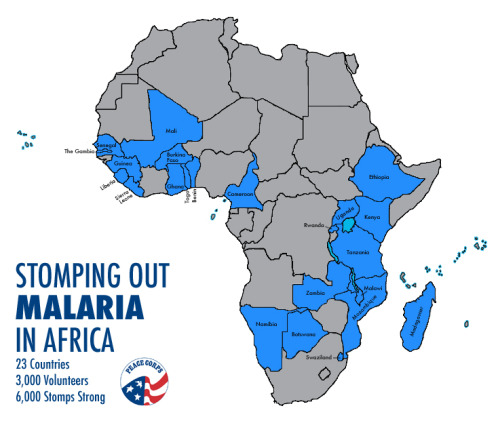
Malaria Month

     Malaria is a disease caused by a parasite carried by a particular type of mosquito (the female anopheles). If a mosquito with the parasite bites you, it gives you the parasite. The parasite lives mainly in the liver, blood, and placenta, and it causes a whole host of problems. If another mosquito bites an infected person, the person can give the parasite to it. It then goes on to bite someone else… thus creating the vicious cycle that is malaria.
     Malaria is often called “palu” (pah-loo) in Burkina, short for its French name paludism. Though malaria is active year round, like everything else here, it has its own season. When the conditions are best for mosquitos to breed is after rainy season. August- November there are more mosquitos, and thus more malaria.
     Simple malaria has signs of fever, chills, body aches, diarrhea, and vomiting. It’s not at all fun, but usually very treatable with simple drugs. If left untreated, however, it can turn into complicated malaria, which includes symptoms like seizures, loss of consciousness, jaundice, anemia, dehydration, and difficulty breathing. Also, death.
     People can develop an acquired resistance to malaria, but it is especially dangerous for children under 5, who have not acquired a resistance yet, and pregnant women, whose resistance doesn’t have the same affect while pregnant.
     Despite clear need, there is no vaccine for malaria yet. Efforts to produce one are ongoing, but much of the world that can afford to fund trials is unaffected by the disease, so they ignore (or remain ignorant of) the need.


March 26, 2012

Frustrating Rambles

I’ve spent the last few months on and off trying to get an AIDS mural in my community. I spent January running the idea by my Major (numerous times), getting a wall approved, buying primary materials in other villages, and doing research and sketches of what HIV prevention methods I thought would be appropriate to portray. I spent most of February begging the Major to find someone to cement the wall.

The one part of the project I couldn’t do myself was the cementing, and the wall is a stucco type thing that you just can’t paint. Well, the guy who did the cement did a terrible job. My Major paid him anyway, but since his payment was the only contribution I asked from my CSPS, I figured it was up to them to decide what he deserved. Besides that, the guy tried to rip me off by saying he needed more cement. Instead of just handing him money (I have learned a thing or two) I went and bought the cement itself and had it sent over. It was sent back. “He didn’t really need it, he said” the kid told me. Great. So here I am with another half a bag of cement no one needs.


Whatever. The guy did a bad job, but I can paint it and try to fix the cement drips and it’ll work out, I thought. I did the first white coat with my nurses. I was excited they wanted to help though they are still asking me for payment… which is getting old. I spent the end of February drawing out all of the grids on the wall and on my sketches.  Last week I finished the pencil drawings on the grids and was decently satisfied. There was one place the cement had fallen off but I was sure my nurse could fix it if he decided to.


I started the painting today. I walked to the CSPS with the paint in my backpack. As I laid out all the supplies I’d gathered  I realized I’d forgotten the pop bottles to mix paints in. I didn’t feel like walking all the way back to my house to get them so I decided but that I could bring them tomorrow. I looked at the penciled in drawings and sighed. I suppose, I thought, I can just do the outlines today.


So I went to get water. Of course, we were out. My CSPS never has water because none of the nurses go get it. I made a similar comment to the Pharmacist. This isn’t America, she replied. No, I said, my friend works at a CSPS here and they have water. It’s just because none of the nurses wants to get it. I was getting in a bad mood. I took a breath.
Is that pump working? I asked.  I’d  noticed no one was using it today. Nope, she replied. You should fix it for us. That’s your job, to help us. So you should give us money to fix the pump. No, I replied. you know that’s not my job. I’ve explained my job to you before. It is not my job to fix your pump and it’s not my job to give out money. She laughed at me.
Go to robinet (a kind of pump you pay for) right behind the CSPS then. Yeah, and who’s gonna pay for that? You can, she tells me. No, I think, I really can’t. I really don’t have money to spare this month. I don’t have the money, I say.  She laughs again. If you’re going to be like that go away from me. I’m tired. I’m just joking she said. Am I laughing? I say. She leaves.
I walk the 10 minutes to another pump, wait my turn,pump the water and carry it back 10 minutes on my head. All of this to wash some brushes.


I get all set with the paint and realize I can’t see the picture I’m painting if I’m painting. Tape, I think. I can tape it to the wall. I ask my new Major for tape. Nope. Don’t have any. Well, what do you put the posters and papers on the wall up with? I reply. We’re out, he says, ask at the Pharmacy. I go ask. I’m out, she says, ask the Major. Are you kidding me? I just asked the Major, I tell her. Oh, well I have some, but tell him he’s got to pay me back. I take the tape back to the Major’s office. She gave me some, but says you’ll have to pay her back, I say. What? he says. Whatever, I think, I’m tired. I just need a little bit, I say. Do you have any scissors to cut it with? No. he says. You should buy me some.

March 16, 2012

Our Stories

" 'The World isn't just the way it is. It is how we understand it, no? And in understanding, we bring something to it, no? Doesn't that make life a story?' " -Pi Patel, Life of Pi,Yann Martel