Malaria is a disease caused by a parasite carried by a particular type of mosquito (the female anopheles). If a mosquito with the parasite bites you, it gives you the parasite. The parasite lives mainly in the liver, blood, and placenta, and it causes a whole host of problems. If another mosquito bites an infected person, the person can give the parasite to it. It then goes on to bite someone else… thus creating the vicious cycle that is malaria.
Malaria is often called “palu” (pah-loo) in Burkina, short for its French name paludism. Though malaria is active year round, like everything else here, it has its own season. When the conditions are best for mosquitos to breed is after rainy season. August- November there are more mosquitos, and thus more malaria.
Simple malaria has signs of fever, chills, body aches, diarrhea, and vomiting. It’s not at all fun, but usually very treatable with simple drugs. If left untreated, however, it can turn into complicated malaria, which includes symptoms like seizures, loss of consciousness, jaundice, anemia, dehydration, and difficulty breathing. Also, death.
People can develop an acquired resistance to malaria, but it is especially dangerous for children under 5, who have not acquired a resistance yet, and pregnant women, whose resistance doesn’t have the same affect while pregnant.
Despite clear need, there is no vaccine for malaria yet. Efforts to produce one are ongoing, but much of the world that can afford to fund trials is unaffected by the disease, so they ignore (or remain ignorant of) the need.
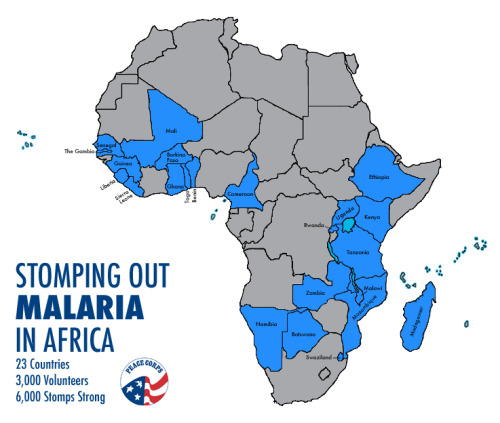
Part of my job here is to help people focus on prevention of this disease.
Prevention in Burkina Faso consists of:
Mosquito Nets: Providing long lasting insecticide-treated nets (LLINs) for people to sleep under. An attempt was made in late 2010 through Burkina’s partnership with some NGOs to provide a net for one out of every two people. In January 2011, I helped hand out over 2000 mosquito nets, but it was not nearly enough. Some families of 8 only got 2 or 3 nets. Nets are also sold, but since people know they can get them free, they don't usually buy them. If used correctly, the nets are held up by sticks or nailed into walls and tucked under sleeping mats or beds, and they are very effective.
Neem cream: A mosquito-repelling lotion made from local ingredients (neem tree leaves, shea butter and soap). Not super effective, it’s no DEET, but very useful… especially in evening activities before a net could be used. In my village people know how to make this but rarely do. Many other villages have set up very effective women’s groups selling the product.
Prenatal counseling: Nurses give a pill to help pregnant women prevent malaria (SP) during prenatal visits. To limit resistance (did I mention there are resistant strains of the disease?), nurses give this medicine to pregnant women only. Pregnant mothers are also supposed to receive a mosquito net with every pregnancy.
Skin coverage: I call this “don’t sleep naked”. It’s difficult to tell people to wear long sleeves in 110 degrees (mosquito season is not in cool weather), but there is no doubt where it is not covered it will be bitten. So I just tell people not to sleep naked and if it’s cooler in the evening, to cover up their kids well.
Window screens: Right now, this is impractical for most families, and it’s somewhat less effective without a screen door (which I’ve never seen anyone but a volunteer have). Nevertheless, the screens work great in keeping mosquitos out. An added bonus is that they keep a lot of flies out, too. Maybe sometime in the future this will be do-able.
Clean Environments: Less mosquitos = less malaria. Standing water is where mosquitos breed. Preventing standing water can involve digging a pit (not easy in a dry country) and filling it with different sized rocks, called a dry well, to help drain water. People don’t always want to do the work to make this happen because it’s really more of a long-term solution. Another way to decrease standing water is to encourage people to keep clean courtyards and keep drinking water covered, both of which are culturally embraced.
Like most diseases here, it’s not always easy for people to understand the benefits of prevention. Someone can take all of these precautions and still get malaria; someone else can take no precautions at all and remain healthy.
Besides prevention people are also trying to get the word out about identification (and therefore, hopefully, quicker treatment) of the disease.
Burkina Faso stats for 2009*
4,500,000 cases were diagnosed malaria (total population estimated: 15,746,232)
8,000 deaths (almost all preventable with timely health care) were attributed to malaria
45% of health care consultations were attributed to malaria
54% of hospitalizations were because of malaria
60% of overall deaths were attributed to malaria
23% of families reported owning at least one treated mosquito net
10% of children under 5 years old were estimated to sleep under treated mosquito nets
*Taken from the 2009 Ministry of Health, Health Statistics
While getting people to see that behavior change can prevent malaria is a challenge, I do believe that if cultural beliefs find a way to accept basic prevention methods, or if prevention methods can be more adapted in local beliefs, the effects of malaria can be greatly reduced. And there’s always hope for that vaccine.
Here’s to the eradication of malaria.
P.S. Particularly for other volunteers: An interesting article on Burkinabe illness concepts and health-seeking behavior in relation to malaria http://www.malariajournal.com/content/6/1/106

