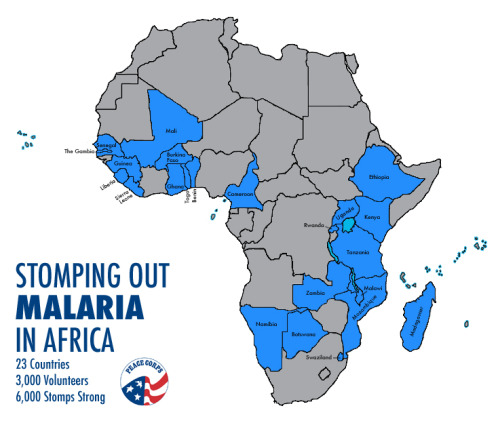
Malaria is a disease caused by a parasite carried by a particular type of mosquito (the female anopheles). If a mosquito with the parasite bites you, it gives you the parasite. The parasite lives mainly in the liver, blood, and placenta, and it causes a whole host of problems. If another mosquito bites an infected person, the person can give the parasite to it. It then goes on to bite someone else… thus creating the vicious cycle that is malaria.
Malaria is often called “palu” (pah-loo) in Burkina, short for its French name paludism. Though malaria is active year round, like everything else here, it has its own season. When the conditions are best for mosquitos to breed is after rainy season. August- November there are more mosquitos, and thus more malaria.
Simple malaria has signs of fever, chills, body aches, diarrhea, and vomiting. It’s not at all fun, but usually very treatable with simple drugs. If left untreated, however, it can turn into complicated malaria, which includes symptoms like seizures, loss of consciousness, jaundice, anemia, dehydration, and difficulty breathing. Also, death.
People can develop an acquired resistance to malaria, but it is especially dangerous for children under 5, who have not acquired a resistance yet, and pregnant women, whose resistance doesn’t have the same affect while pregnant.
Despite clear need, there is no vaccine for malaria yet. Efforts to produce one are ongoing, but much of the world that can afford to fund trials is unaffected by the disease, so they ignore (or remain ignorant of) the need.